How to Care for Plants After Repotting
To care for plants after repotting, water according to the plant’s needs, let excess water drain and maintain suitable light. Check the potting mix before watering again. Avoid unnecessary root disturbance and extra doses of plant-care products. Watch for worsening symptoms rather than assuming every drooping leaf is normal repotting stress.
1. Water Carefully After Repotting
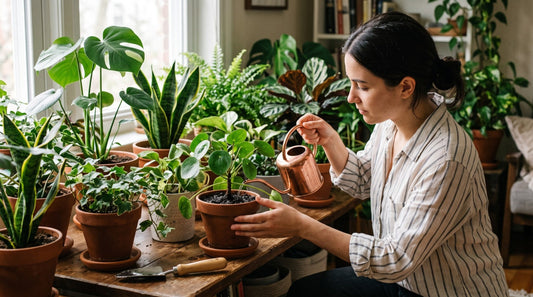
For most leafy container plants, water the fresh potting mix thoroughly until water runs through the drainage holes. Empty the saucer afterwards.
Cacti and succulents can need different aftercare, particularly if roots were cut or damaged. Follow guidance for your plant instead of applying the same watering routine to every pot.
After the initial watering, check moisture before watering again. A larger pot or different potting mix can change how quickly the soil dries.
Avoid this mistake: watering daily because the plant looks droopy. Wilting can happen with both underwatering and overwatering.
2. Keep Light Conditions Suitable
Avoid combining repotting with an abrupt move into harsh sunlight. Plants accustomed to indirect light can be scorched by sudden strong sun.
For many leafy houseplants, bright indirect light is appropriate. Sun-loving vegetables and outdoor plants have different requirements, so retain suitable light and introduce location changes gradually.
For an Indian balcony garden, check whether the new position exposes the plant to intense afternoon sun or heavy rain.
Avoid this mistake: putting every repotted plant in a dark corner. Protection from harsh sun shouldn’t mean depriving it of the light it needs.
3. Check Drainage and Pot Size
Make sure drainage holes are open and the pot isn’t standing in collected water.
A pot that is much larger than the root ball can hold moisture for too long. This can reduce air around the roots and increase the risk of rot, especially when growth is slow or watering is excessive.
If the mix remains wet and symptoms worsen, reassess drainage and pot size before adding more water.
Avoid this mistake: assuming a bigger pot always means better growth.
4. Review Feeding Before Adding Products
Check whether the fresh potting mix already contains nutrients. Extra feeding immediately after repotting may be unnecessary. The right timing depends on the mix, watering and plant growth.
Avoid adding several new products at once. You’ll find it harder to identify what helped or caused a problem.
Considering a root booster? Check whether its instructions cover your plant and situation, and confirm the dose before applying it. A booster shouldn’t be relied on to correct waterlogging or unsuitable light.
5. Monitor Your Plant’s Condition
Take a photograph after repotting so you can compare changes later. Observe leaf firmness, moisture levels and whether symptoms improve or worsen.
|
What you notice |
What to check |
|
Drooping leaves |
Moisture near the root ball, drainage and heat exposure |
|
Yellowing leaves with persistently wet mix |
Excess watering or an oversized pot |
|
Scorched patches after a location change |
Sudden exposure to stronger sunlight |
|
Soft stem base or worsening decline |
Possible rot or another problem requiring diagnosis |
These signs are clues, rather than a diagnosis. Persistently wet mix and worsening symptoms deserve closer attention.
Avoid repeatedly lifting the plant to inspect its roots. Inspect more closely when symptoms justify it.
Frequently Asked Questions
Should I water immediately after repotting?
Usually, yes, for leafy container plants in a suitable, draining mix. Cacti, succulents and plants with damaged roots may need a different approach.
How long does repotting stress last?
There’s no fixed recovery time. Plant type, root disturbance and growing conditions affect how quickly a plant settles. Worsening decline needs investigation.
Can I use a root booster after repotting?
Check that the product instructions support this use for your plant. Confirm suitability and timing first, and continue appropriate watering, drainage and light.
Choosing additional plant care? Explore Homfert’s plant-care range and check the relevant product instructions before use.
Tags:
Related Articles
Drip Irrigation: Benefits for Modern Farmers
Aug 30 2026
How to Build Long-Term Soil Fertility
Aug 30 2026
How Soil pH Affects Crop Growth
Aug 28 2026

Crop Rotation: How It Improves Soil Fertility
Aug 28 2026
How to Increase Vegetable Yield Naturally
Jul 31 2026

The Complete Guide to Watering Plants Correctly
Jul 21 2026